
Concrete, Brick and Rubble Skip Bins
Breaking up a path, a slab, an old brick wall or a tiled floor? Rubble is cheap to get rid of when it is kept clean, and expensive when it is mixed in with everything else.
- Same-day delivery
- Meet or beat any quote
- Sydney wide
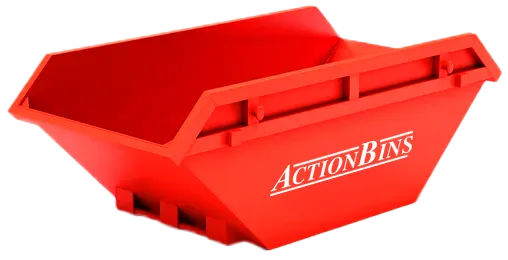
Short answer: yes, concrete, bricks, tiles and rock can go in a skip bin. Put them in a clean waste or mixed rubble bin, keep soil and rubbish out, and stick to 2m3 to 4m3 because of the weight.
Updated October 2026.
Which rubble bin do you need?
| Bin type | What it takes | What it does not take |
|---|---|---|
| Clean waste | One material only: concrete, or bricks, or roof tiles, or floor tiles, or rock | Anything mixed, soil, turf, general waste |
| Mixed rubble | Bricks, mortar, sandstone, rock, roof and floor tiles, concrete rubble | Everything else |
| Mixed heavy waste | Rubble plus timber, metal, cabinets, furniture and household rubbish | Soil, sand, clay, synthetic grass |
If you have a pile of nothing but concrete, a clean waste bin is the cheapest way to move it. If it is a demolition mix of bricks, tiles and concrete, go mixed rubble. Once timber, plasterboard or rubbish gets involved, it is mixed heavy waste.
Tell us what you are knocking down and we will tell you which bin.
Why rubble is cheaper when it is clean
Clean concrete and brick can be crushed and recycled into road base and aggregate. Mixed loads have to be sorted or landfilled, and both cost more. A rubble bin that turns up with timber or rubbish through it gets charged as mixed waste.
Weight limits
Broken concrete and brick weigh about 1.4 to 1.6 tonnes per cubic metre loaded. That puts a full 4m3 rubble bin at roughly 6 tonnes, which is near the top of what a standard skip truck can lift.
| Bin size | Rough weight full of rubble | Typical job |
|---|---|---|
| 2m3 | about 3 tonnes | A small path or a few square metres of tiles |
| 3m3 | about 4.5 tonnes | A bathroom floor and wall tiles, a short brick wall |
| 4m3 | about 6 tonnes | A small slab or a garden retaining wall |
Fill rubble bins to the level of the sides and no higher. Spread the load rather than piling it at one end.
Before you start breaking anything
If the house was built before 1990, check for asbestos. Fibro sheeting, old wet area walls, eaves and some vinyl floor backing can all contain it. Asbestos cannot go in any skip bin. See what to do with asbestos.
Related pages
Common questions
Can you put concrete in a skip bin?
Yes. Broken concrete, bricks, tiles and rock go in a clean waste or mixed rubble bin. You can also put them in a mixed heavy waste bin, but a dedicated rubble bin is usually cheaper.
What is the difference between clean waste and mixed rubble?
A clean waste bin holds one material only, for example just concrete or just bricks. A mixed rubble bin can take a mix of bricks, mortar, concrete, tiles, sandstone and rock. Neither can have soil, timber or general rubbish in it.
How heavy is a skip bin full of concrete?
Broken concrete and brick weigh roughly 1.4 to 1.6 tonnes per cubic metre once loaded. A full 3m3 bin of rubble is around 4.5 tonnes, which is why rubble bins are kept small.
Can concrete with steel reinforcing go in?
Usually yes, as long as the concrete is broken into pieces that sit below the top of the bin. Mention reo when you book.
Can I put a bathroom strip-out in a rubble bin?
Only if it is just tiles, mortar and concrete. Once you add plasterboard, vanities or timber it becomes mixed heavy waste. Check for asbestos before stripping any wet area in a pre 1990 home.
Need a rubble bin delivered? We cover Sydney seven days.